Technology
Upward Continuous Casting
Upward Casting — Oxygen-Free Profiles Directly from the Melt
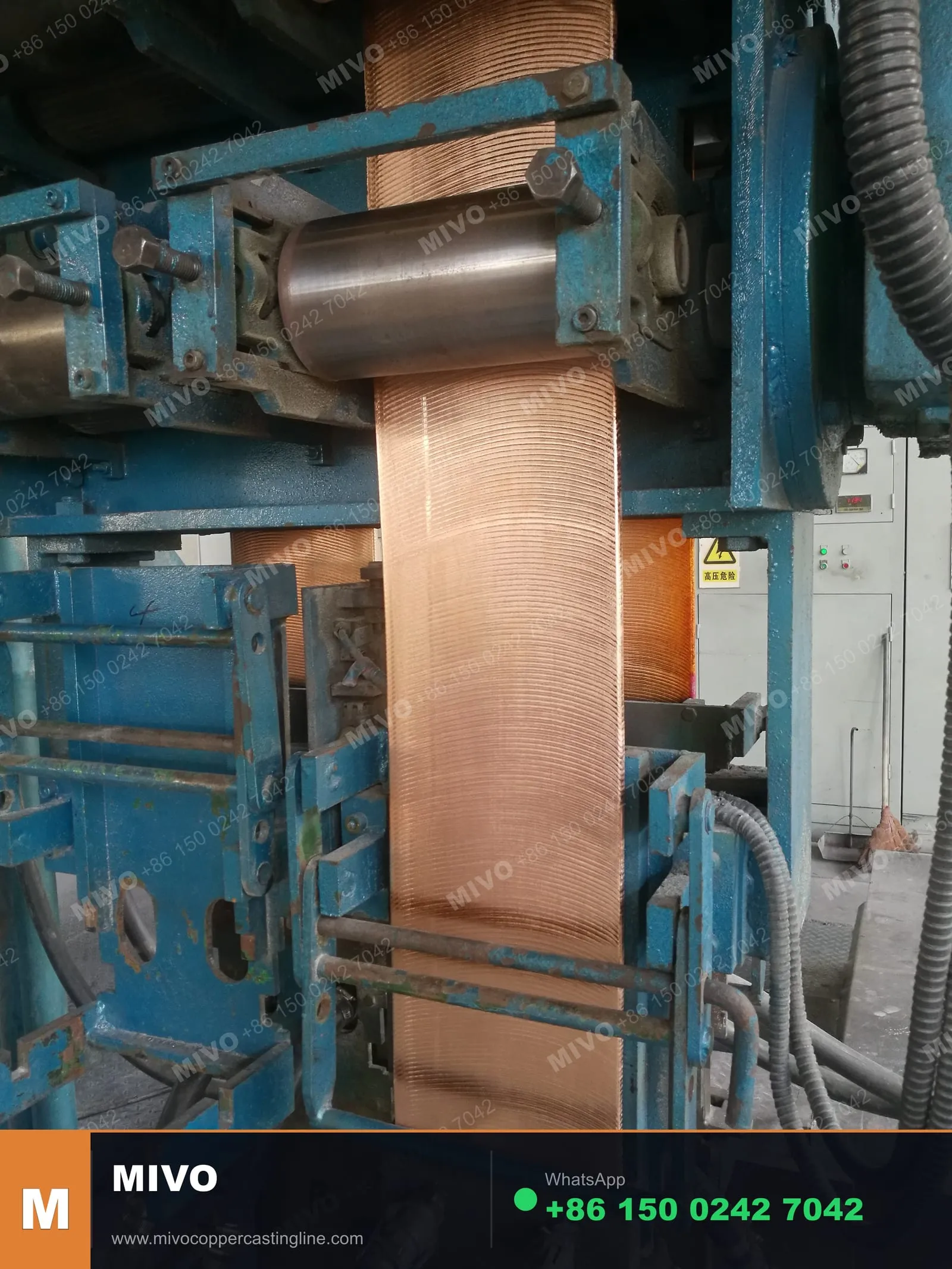
How Upward Continuous Casting Works
In the upward continuous casting process, molten copper is held in an induction furnace at precisely controlled temperature. A graphite crystallizer die is positioned with its inlet submerged below the melt surface. The solidified copper profile is withdrawn upward through the die at a controlled speed, while fresh molten copper continuously replaces it from below.
Because the die inlet is submerged in the melt and the process operates in a reducing atmosphere, oxygen contamination is essentially eliminated. The copper solidifies directionally from the die contact surfaces inward, producing a column-grain structure with minimal porosity and excellent surface finish.
Multiple crystallizer positions can be arranged on a single furnace, making this an efficient process for producing multiple strands of the same profile simultaneously.
Process Advantages
- No oxygen pickup — melt surface is protected by inert atmosphere
- Near-net-shape output reduces downstream processing steps
- Low scrap rate and high material yield
- Suitable for cathode copper and high-purity scrap feed
- Compact footprint vs. vertical DC casting
Applicable Products
Related Products
Request a Quote
Interested in upward continuous casting for your facility? Send us your product spec and capacity target.
Request a Quote Process OverviewGet in touch
Ready to discuss your casting line requirements?
Our engineers can help you select the right equipment configuration for your capacity needs and product specifications.