Technology

Upward Continuous Casting

Upward Casting — Oxygen-Free Copper Busbar Directly from the Melt

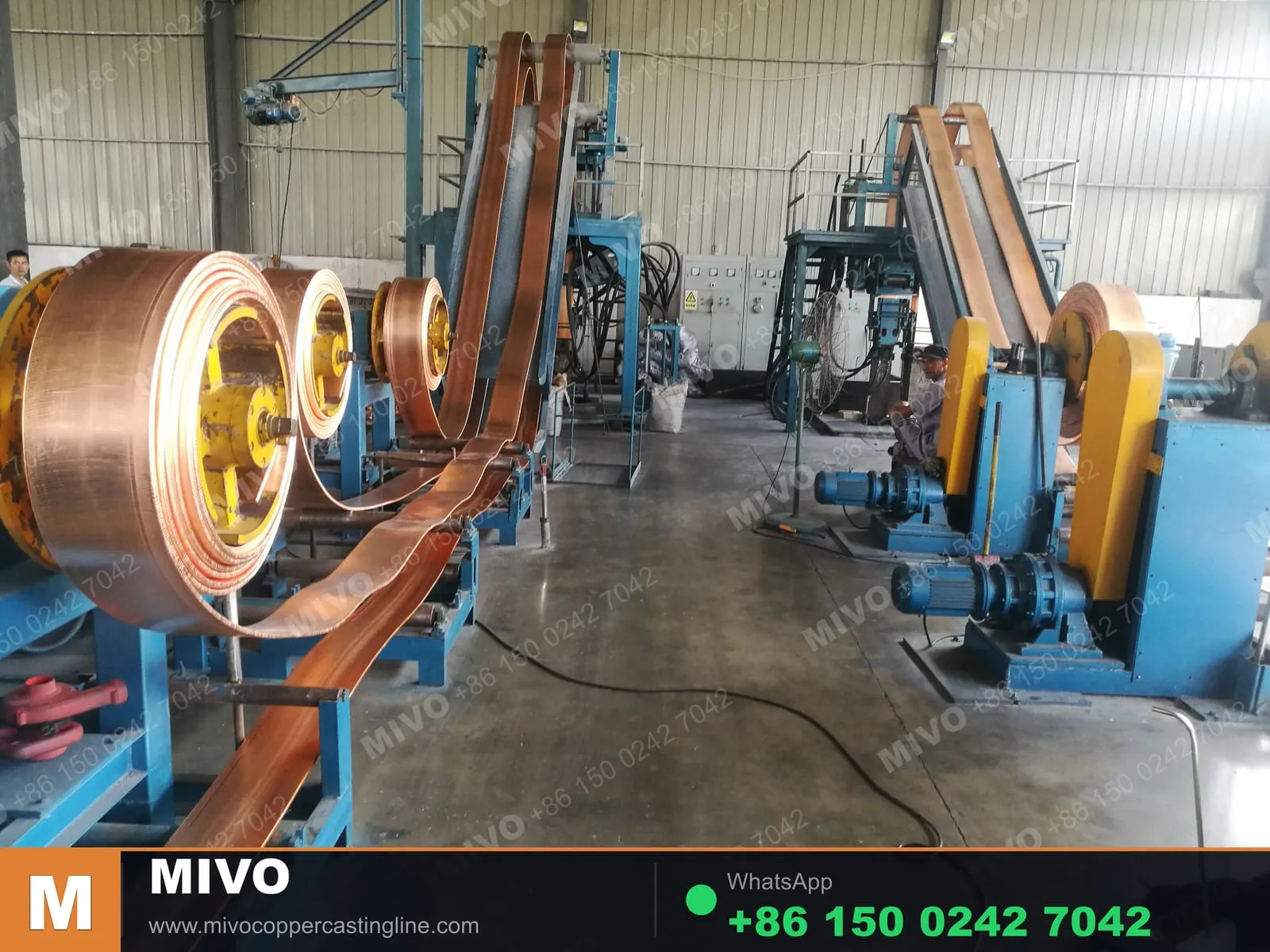
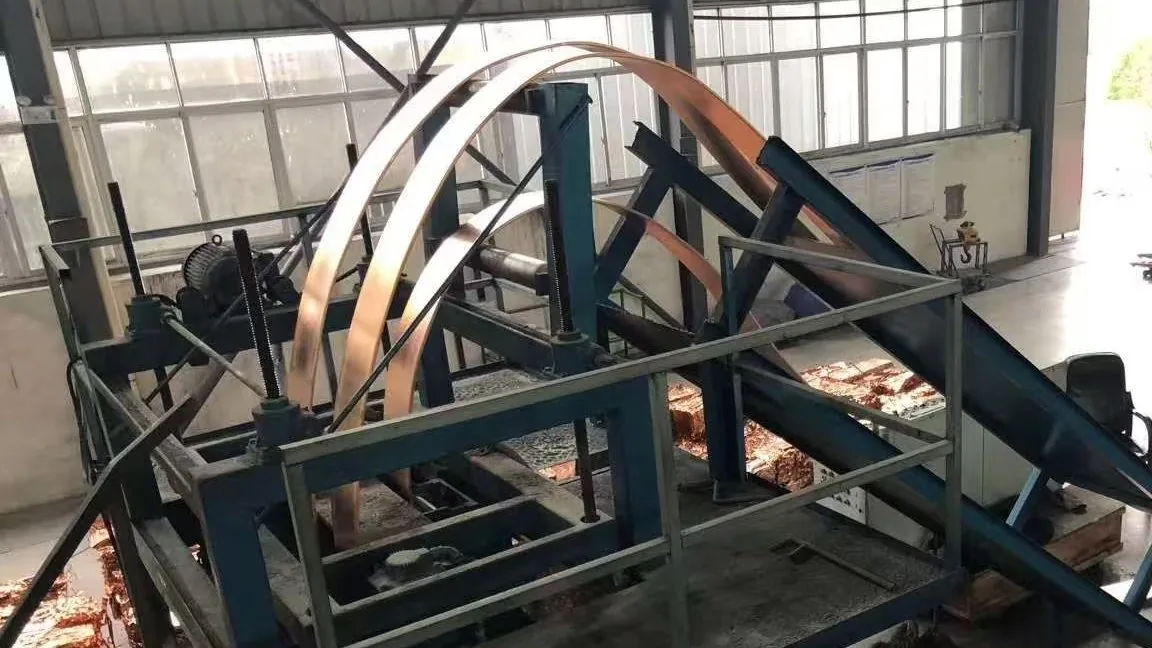
Copper casting machine for busbar upward continuous casting process

How Upward Continuous Casting Works

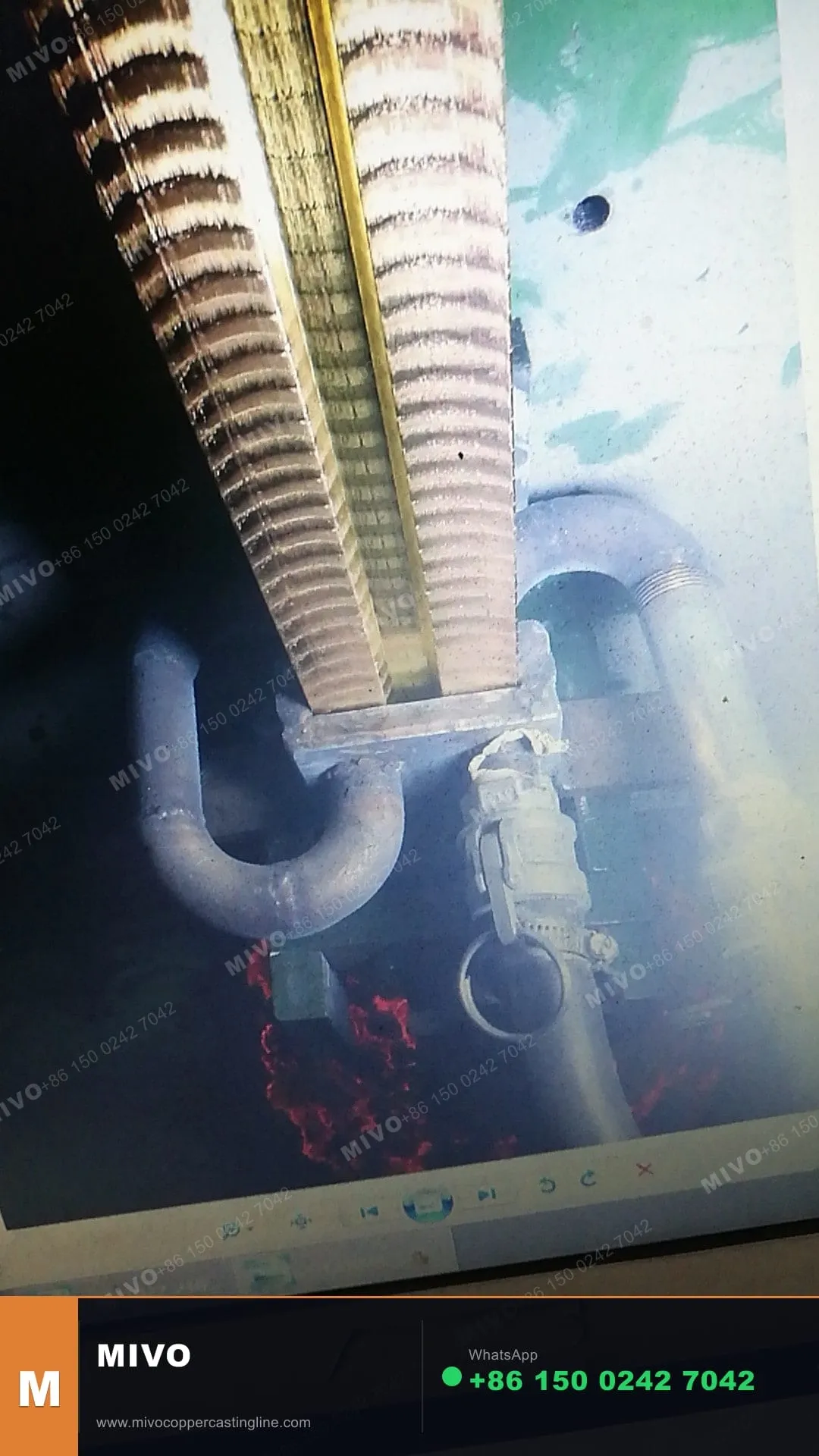
In the upward continuous casting process, molten copper is held in an induction furnace at precisely controlled temperature. A graphite crystallizer die is positioned with its inlet submerged below the melt surface. The solidified copper profile is withdrawn upward through the die at a controlled speed, while fresh molten copper continuously replaces it from below.

Because the die inlet is submerged in the melt and the process operates in a reducing atmosphere, oxygen contamination is essentially eliminated. The copper solidifies directionally from the die contact surfaces inward, producing a column-grain structure with minimal porosity and excellent surface finish.

Multiple crystallizer positions can be arranged on a single furnace, making this an efficient process for producing multiple strands of the same profile simultaneously.

When to Evaluate Upward Continuous Casting

For copper busbar, copper strip, or flat copper profile projects, buyers usually need to review the product form, section size, output target, feed material, and downstream fabrication route before choosing the casting equipment. Upward continuous casting may be the route to evaluate when the project focuses on copper flat bar or strip profiles for later punching, drilling, bending, or rolling.

The final line configuration still depends on the buyer's exact width, thickness, annual tonnage, copper requirement, available utilities, cooling-water conditions, and workshop layout. Mivo reviews these inputs before recommending the crystallizer configuration, strand arrangement, furnace scope, and auxiliary equipment.

If the target product is a round billet, rectangular slab, hollow billet, or copper-alloy feedstock for extrusion, forging, or rolling, the project should be reviewed separately as a semi-continuous casting application rather than being treated as the same route as copper busbar upward casting.

How to choose a copper casting machine for busbar production

If the target output is copper busbar, flat bar, or another flat conductive profile that will later be punched, bent, or drilled, buyers should usually confirm the product form, width and thickness range, annual output, feed material, and plant utility conditions before choosing a copper casting machine.

For this type of project, the upward continuous casting route should be evaluated separately because it is designed for continuous flat-profile production rather than fixed-length billet or slab casting. Mivo usually reviews section size, output target, and site conditions to define the crystallizer arrangement, strand count, furnace scope, and matching auxiliary equipment.

Buyers can review the copper busbar casting line when the project is focused on flat conductor output, or compare with semi-continuous casting when the target product is billet, slab, or copper-alloy feedstock.

Process Advantages

  • No oxygen pickup — melt surface is protected by inert atmosphere
  • Near-net-shape output reduces downstream processing steps
  • Low scrap rate and high material yield
  • Suitable for cathode copper and high-purity scrap feed
  • Compact footprint vs. vertical DC casting

What Upward Casting Produces

Flat Bar (Busbar)
Custom width × thickness — primary output of this process
Narrow Strip
Thin-gauge flat profiles for electrical contact applications
Custom Cross-Sections
Profile per drawing — contact us for feasibility review
Multi-Strand
Multiple identical profiles from a single furnace

Related Products

Get ROI & Pricing

Interested in upward continuous casting for your facility? Send us your product spec and capacity target.

Get ROI & Pricing Process Overview

Get in touch

Ready to discuss your casting line requirements?

Our engineers can help you select the right equipment configuration for your capacity needs and product specifications.